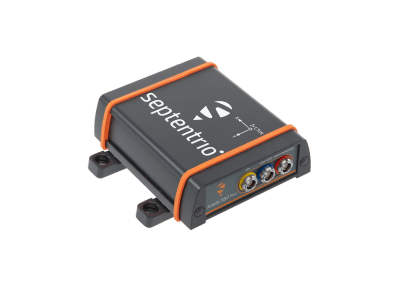
Septentrio Mosaic-X5: Redefining Resilient GNSS Receiver Technology with Anti Jamming and Anti-Spoofing Capabilities
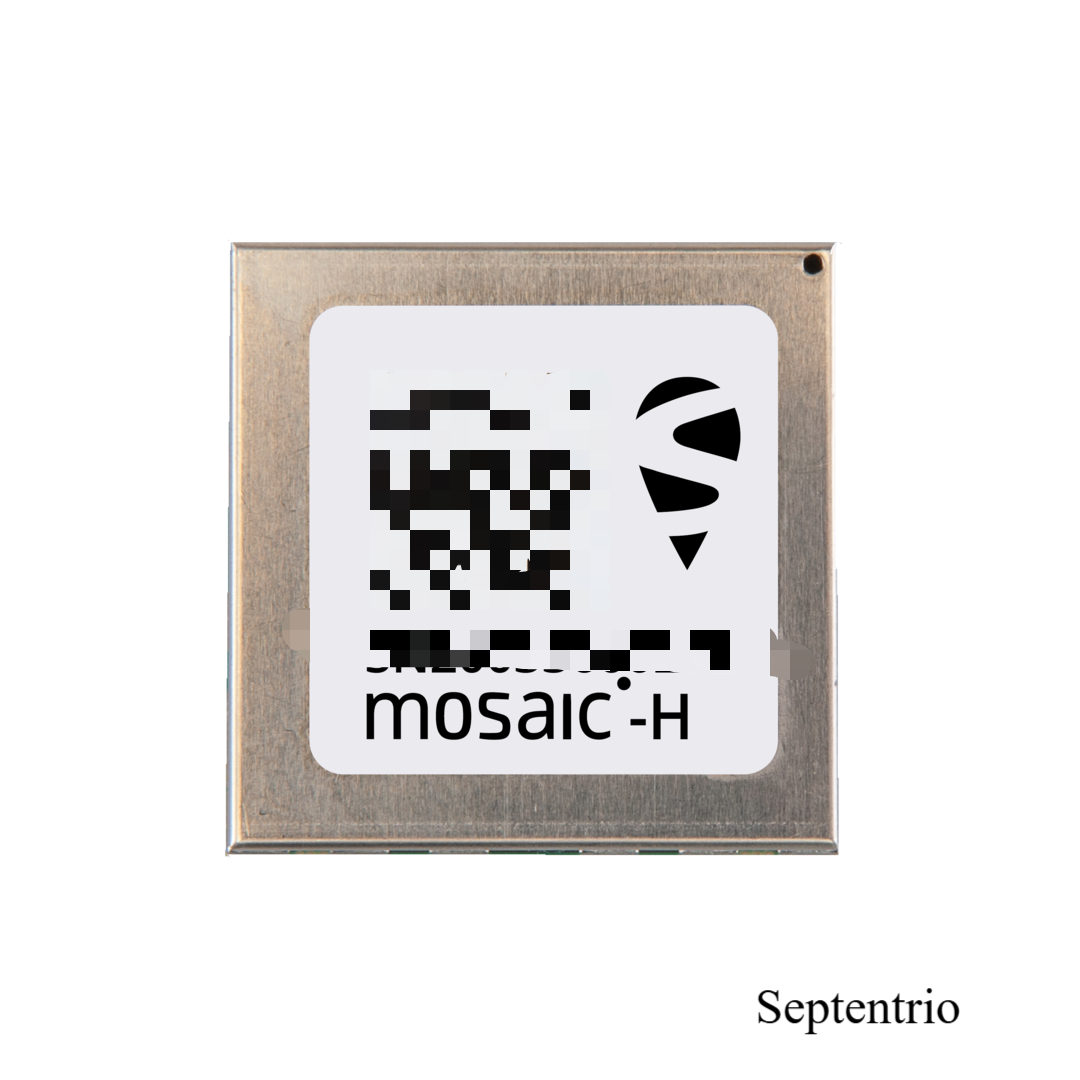
In cutting-edge fields such as autonomous driving, precision agriculture, and unmanned aerial vehicle navigation, the positioning accuracy and reliability of the Global Navigation Satellite System (GNSS) have become key factors determining the application of technology. However, as the electromagnetic environment becomes increasingly complex, problems such as multipath jamming, malicious spoofing signals, and spectrum congestion continue to challenge the boundaries of traditional positioning technologies. It is precisely because of these industry pain points that Septentrio’s Mosaic-X5 resilient GNSS receiver, with its breakthrough anti-jamming architecture and adaptive algorithm, is redefining the possibilities of high-precision positioning technology.
As a benchmark of innovation in GNSS technology, the Septentrio Mosaic-X5 resilient GNSS board deeply integrates Septentrio’s more than two decades of technological accumulation in satellite navigation. The module uses an advanced 40-nanometer chip process and integrates a dual-core ARM Cortex-R52 processor. While achieving centimeter-level real-time dynamic positioning (RTK), it innovatively features a dual protection system of adaptive anti-jamming (AIM+) and signal authentication (SSAC). Its unique multi-band parallel processing capability supports full band signal reception including GPS L1/L2/L5, Galileo E1/E5a/E5b/E6, GlonASS L1/L2/L3, Beidou B1/B2/B3, etc. Through real-time spectrum monitoring and intelligent signal quality assessment, it can effectively suppress 99% of in-band and off-band jamming. Even in scenarios with strong electromagnetic jamming such as airports and ports, it can maintain positioning continuity.
Unlike the passive defense strategy of traditional RTK GPS modules, the Septentrio Mosaic-X5 resilient GNSS receiver has made a technological leap in anti-spoofing protection. Its built-in SSAC (Signal Feature Self-Correlation Authentication) algorithm can precisely identify fake satellite signals by comparing physical layer features such as signal propagation delay and Doppler frequency shift, combined with Septentrio’s unique signal fingerprint database. When spoofing attacks are detected, the module can not only trigger an automatic masking mechanism within 300 milliseconds but also form a dynamic defense network through a cloud-based threat intelligence sharing system—a technology that demonstrates unique value in sensitive areas such as critical infrastructure protection and military reconnaissance. Actual test data showed that the Resilient GNSS board with SSAC successfully defended against spoofing attacks with a power density of -80 dBm and a bit error rate of less than 0.01% in darkroom tests simulating complex electromagnetic environments.
In terms of positioning performance, the Septentrio Mosaic-X5 anti-jamming GNSS module maximizes the multi-constellation advantage through innovative signal fusion technology. Its patented PAC (Phase Enhancement Compensation) algorithm can intelligently correct ionospheric delay errors. Combined with Septentrio’s unique multipath suppression technology, the module can achieve a positioning accuracy of 2 cm in the horizontal direction and 5 cm in the elevation direction even in urban environments with a high concentration of high-rise buildings. For scenarios that require real-time positioning and orientation, such as drone formation and construction machinery collaboration, the module’s built-in six-axis inertial measurement unit (IMU) and dual-antenna design not only provide a heading angle resolution of 0.1° but also maintain sub-meter navigation accuracy even when satellite signals are temporarily interrupted. This performance indicator has passed the ISO 9001 certified industrial-grade vibration test, solidifying its role in land surveying equipment and drone receiver applications.
From the perspective of system integration, the Septentrio resilient GNSS receiver’s modular design fully takes into account the engineering adaptation needs of industry users. Its compact 36x56mm package is compatible with the standard SMA interface, supports industrial communication protocols such as CAN, UART, SPI, USB, and the built-in embedded Linux system allows users to directly deploy customized positioning algorithms. More notably, the module uses dynamic power management technology, keeping the average power consumption under 1.2 watts while operating across the entire frequency band, which makes it a perfect fit for endurance-sensitive scenarios such as field mapping equipment and mobile robots.