-

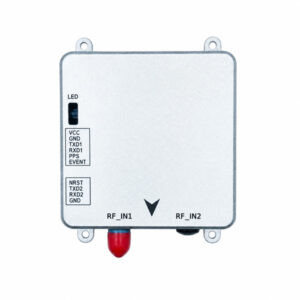
Flange-mount dual-antenna heading receiver with on-board SD card logging
- Septentrio mosaic-H, multi-constellation, dual-frequency
- Dual-antenna heading: 0.15° with 1 m baseline, 0.03° with 5 m
- Centimetre-level RTK: 0.6 cm + 0.5 ppm, 7 s initialisation
- RTK + attitude at 20 Hz, raw measurements at up to 100 Hz
- AIM+ anti-jamming, LOCK+, IONO+, APME+ and RAIM+
- SD/MMC card slot for on-board raw data logging
- Metal enclosure with four mounting ears, 13 mm thick, 60 g
-
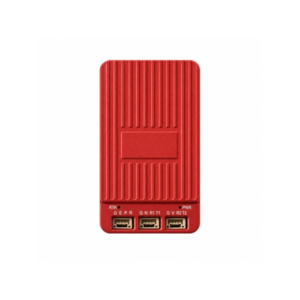
Compact dual-antenna RTK receiver for position, heading and pitch or roll
- Septentrio mosaic-H, multi-constellation, dual-frequency, 448 channels
- Dual-antenna heading 0.15° and pitch/roll 0.25° (1 m spacing)
- Centimetre-level RTK: 0.6 cm + 0.5 ppm, 7 s initialization
- Heading without vehicle motion, from standstill
- AIM+ anti-jamming, LOCK+, IONO+, APME+ and RAIM+
- 2 × UART, USB Type-C and microSD logging (up to 32 GB)
- Small box: 68.4 × 41.8 × 13.5 mm, 45 g
Eview mosaic-H heading receivers use the Septentrio mosaic-H dual-antenna module to give centimetre-level RTK position and true heading from two antennas: 0.15° at a 1 m antenna baseline, with no magnetometer to calibrate.
- HB6 Pro: dual-antenna RTK heading receiver for vehicles, robots and drones.
- HB56H: heading receiver with SD card logging.
mosaic-H heading: quick answers
Why use dual-antenna GNSS heading? It gives heading at standstill and is not disturbed by motors, batteries or steel. See how dual-antenna heading works.
What antenna spacing do I need? Heading accuracy improves with baseline length; 0.15° is specified at 1 m.
How do I get datasheets or a quote? Email sales@gnss-solutions.com with your application and quantity.