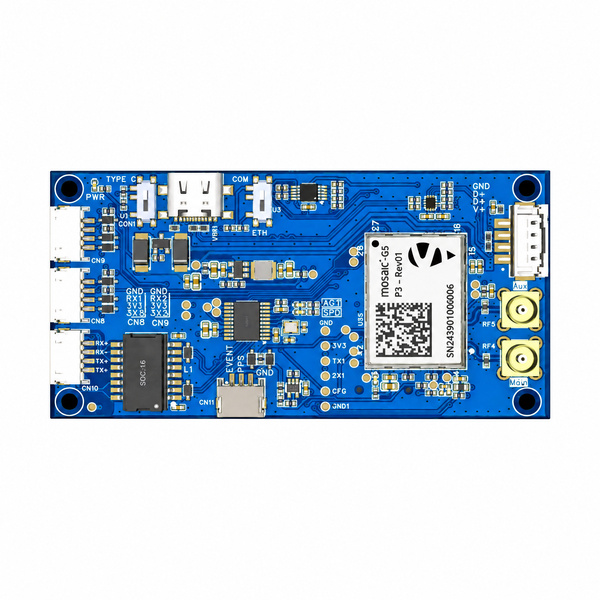
G5P3H EVK mosaic-G5 Evaluation Board — Septentrio mosaic-G5 P3/P3H
Evaluation board for prototyping and integrating mosaic-G5 RTK
- Eview evaluation board built around the Septentrio mosaic-G5 P3 or P3H
- Centimetre-level RTK: 0.6 cm + 0.5 ppm horizontal
- P3H version: dual-antenna heading 0.15° (1 m baseline)
- USB Type-C with two virtual serial ports for direct PC setup
- 2 × TTL UART, Ethernet, PPS output and event input
- Kit with RJ45 adapter, 2 × TTL-to-RS232 and 2 × MCX-to-TNC cables
- Compact 80 × 41 mm board, 5 V supply
No forms to fill in — we reply within one business day.
mosaic-G5 evaluation board for engineers
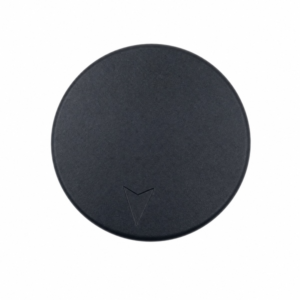
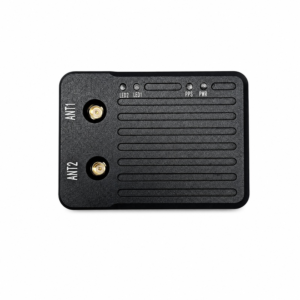
The Eview G5P3H EVK is a mosaic-G5 evaluation board for engineers who want to test, prototype and integrate centimetre-level RTK GNSS positioning before designing their own hardware. It is Eview’s own board, built around the Septentrio mosaic-G5 and supplied with the GNSS module already fitted: the P3 version for single-antenna RTK, or the P3H version for dual-antenna RTK with heading. All the main signals are brought out to standard connectors, so you can connect a PC, a flight controller or a robot computer in minutes. It is part of our mosaic-G5 GNSS boards.
Evaluate mosaic-G5 RTK and heading performance
The mosaic-G5 tracks all constellations on all frequencies and gives RTK accuracy of 0.6 cm + 0.5 ppm horizontal and 1 cm + 1 ppm vertical, with output up to 20 Hz and latency below 10 ms. On the P3H version, a second antenna on the AUX input adds heading and pitch or roll: 0.15° heading at a 1 m baseline. Use the EVK to measure accuracy, initialization time and heading on your own vehicle and antennas. See how dual-antenna GNSS heading works, and the mosaic-X5 vs mosaic-G5 P3H comparison.
Test AIM+ anti-jamming and OSNMA
The mosaic-G5 includes Septentrio AIM+ interference monitoring and suppression and Galileo OSNMA anti-spoofing, so you can check how your platform behaves near radio links, motors and other noise sources before you integrate. LOCK+, IONO+, APME+ and RAIM+ keep tracking, RTK and integrity stable in difficult conditions. Learn more about anti-jamming GNSS receivers and OSNMA anti-spoofing.
Interfaces for prototyping and integration
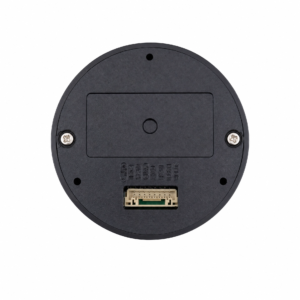
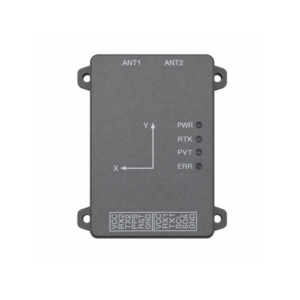
A USB Type-C port gives two virtual serial ports for setup and data from a PC; a switch moves USB to a PH2.0 4-pin header for a fixed connection. Two TTL UARTs on ZH1.5 connectors (with 3.3 V output) connect directly to flight controllers and embedded boards, and a mode switch selects TTL-1 or the Ethernet port. A 3-pin connector carries the PPS output and event input for timing and camera triggering, and two MCX connectors take the MAIN and AUX antennas. The board runs from 5 V. It accepts RTCM v3.x corrections and outputs NMEA 0183 and Septentrio SBF. Firmware and manuals are on our firmware downloads page.
Applications
- UAVs and drones: test RTK and heading with your autopilot before building it into the airframe.
- Robotics and AGVs: prototype centimetre positioning for outdoor autonomous robots.
- Robotic lawn mowers: evaluate RTK near trees and buildings without boundary wire.
- Precision agriculture: test guidance and heading for field robots and tractors.
- Inspection and patrol: develop positioning for inspection robots and patrol vehicles.
- Surveying and GIS: assess raw data and RTK for compact survey instruments.
Frequently asked questions
What is the difference between the P3 and P3H versions of the EVK?
Both give the same mosaic-G5 RTK accuracy. The P3 version is for single-antenna positioning. The P3H version uses both MAIN and AUX antenna inputs for heading and pitch or roll (0.15° heading at 1 m baseline).
What is included in the G5P3H EVK kit?
The kit contains the 80 × 41 mm evaluation board, one RJ45 Ethernet adapter, two TTL-to-RS232 adapters and two MCX-to-TNC antenna cables. GNSS antennas are ordered separately.
Can I connect the EVK to ArduPilot or PX4?
Yes. Connect a TTL UART to the flight controller and use NMEA or Septentrio SBF output. See our ArduPilot GNSS guide.
Which Eview product should I use after evaluation?
For a ready-to-use mosaic-G5 receiver, see the HB52 ultralight RTK receiver or the HB51 heading receiver. Our team can also advise on integrating the mosaic-G5 into your own design.
How do I get the full G5P3H EVK datasheet or a quote?
Email sales@gnss-solutions.com for the complete datasheet with pin-out, or ask a quote with your application and quantity.
Related reading
G5P3H specifications
| Product type | Eview evaluation board built around Septentrio mosaic-G5 (module fitted) |
|---|---|
| Versions | P3: single antenna, positioning · P3H: dual antenna, positioning + heading |
| GNSS signals | GPS L1C/A, L1C, L2C, L2P(Y), L5 · GLONASS L1, L2, L3 CDMA · Galileo E1, E5a, E5b, E6 · BeiDou B1I, B1C, B2a, B2I, B2b, B3I · QZSS L1C/A, L1C/B, L2C, L5, L6 |
| RTK accuracy (RMS) | 0.6 cm + 0.5 ppm horizontal, 1 cm + 1 ppm vertical |
| Heading accuracy (P3H) | 0.15° (1 m baseline) |
| Maximum update rate | 20 Hz |
| Latency | <10 ms |
| Anti-jamming / anti-spoofing | AIM+, Galileo OSNMA |
| Data formats | RTCM v3.x input, NMEA 0183, Septentrio SBF |
| USB | Type-C with 2 virtual serial ports, or PH2.0 4-pin header (switch-selected) |
| Serial and network | 2 × TTL UART (ZH1.5 4-pin, 3.3 V output), Ethernet (ZH1.5 4-pin, switch-selected with TTL-1) |
| Timing I/O | PPS output, event input (ZH1.5 3-pin) |
| Antenna connectors | 2 × MCX (MAIN, AUX) |
| Power supply | 5 V DC |
| Board size | 80 × 41 mm |
| Kit contents | Board, RJ45 adapter, 2 × TTL-to-RS232 adapter, 2 × MCX-to-TNC cable |
| Complete datasheet | On request: sales@gnss-solutions.com |
Product datasheet
The complete datasheet (GNSS signals, interfaces, pin-out, electrical and environmental specifications) is available on request. Email sales@gnss-solutions.com with the product name and your application.
Support documentation
Email sales@gnss-solutions.com for a quote, user manuals or integration support.