HB51 RTK Heading Receiver with Magnetometer — Septentrio mosaic-G5 P3H
Dual-antenna RTK heading receiver with built-in magnetometer
- Septentrio mosaic-G5 P3H, 789 hardware channels
- Multi-constellation, multi-frequency RTK: 0.6 cm + 0.5 ppm
- Dual-antenna heading: 0.15° with 1 m baseline
- PNI RM3100 3-axis magnetometer for compass heading
- AIM+ anti-jamming and Galileo OSNMA anti-spoofing
- Rover or base station, up to 20 Hz output
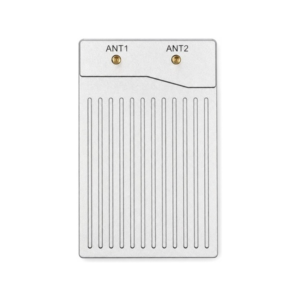
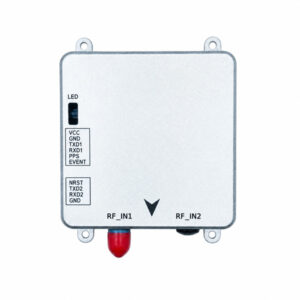
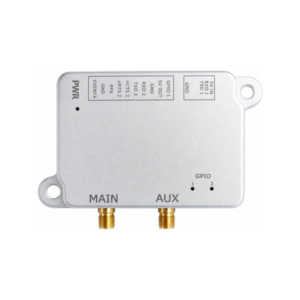
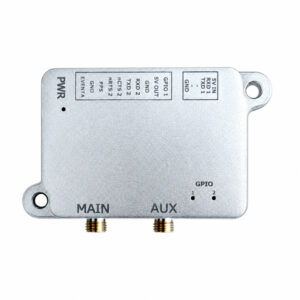
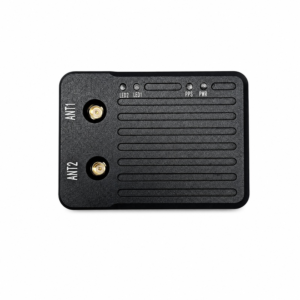
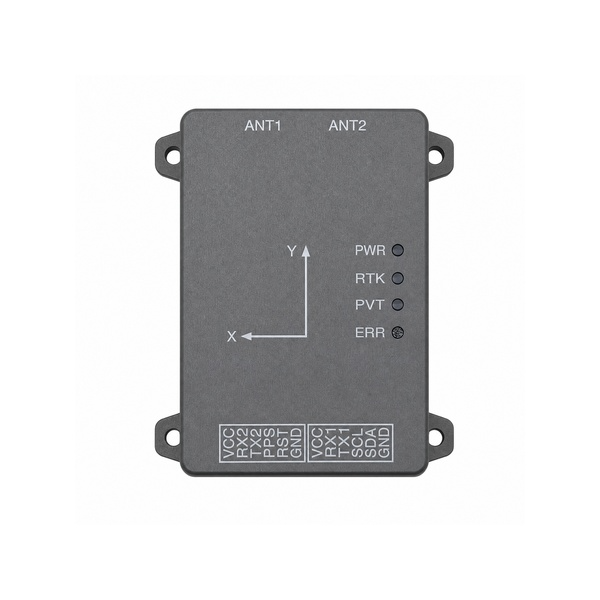
- Easy integration: 2 × UART, I2C, PPS, event, 2 × MMCX
No forms to fill in — we reply within one business day.
RTK heading receiver with magnetometer for drones and robots
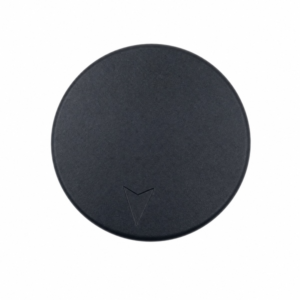
The Eview HB51 is a compact dual-antenna RTK GNSS receiver that outputs centimetre-level position and true heading from one box. Built around the Septentrio mosaic-G5 P3H, it tracks GPS, GLONASS, Galileo, BeiDou and QZSS on multiple frequencies, and adds a PNI RM3100 three-axis magnetometer so your system also has a compass reference. It is part of our mosaic-G5 box receivers.
Dual-antenna heading plus magnetic compass
Two MMCX antenna inputs give GNSS heading of 0.15° with a 1 m baseline, without relying on vehicle motion. The on-board RM3100 magnetometer is read over I2C and gives the autopilot or host computer an independent magnetic heading, which is useful at start-up and as a cross-check. See how dual-antenna GNSS heading works.
AIM+ anti-jamming and OSNMA anti-spoofing
Septentrio AIM+ detects and suppresses narrowband and wideband interference, so the HB51 keeps its fix near radio links, motors and other noisy electronics. Galileo OSNMA authenticates satellite signals to protect against spoofing. Learn more about anti-jamming GNSS receivers and OSNMA anti-spoofing.
GNSS+ technologies
LOCK+ keeps tracking stable under vibration and fast movement. IONO+ protects RTK accuracy during ionospheric scintillation (why RTK drops after sunset). APME+ reduces multipath near buildings, water and metal structures. RAIM+ monitors position integrity.
Easy integration
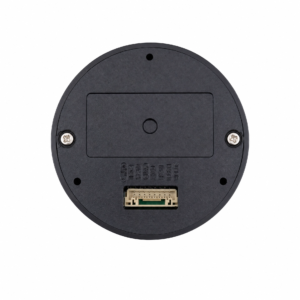
Two UARTs on GH1.25 6-pin connectors, I2C for the magnetometer, PPS output and event input connect the HB51 to flight controllers, robot computers and data loggers. It runs from 5 to 12 V DC, accepts RTCM v3.x corrections (including MSM) from CORS networks or your own base, and outputs NMEA 0183 and Septentrio SBF. It can also be configured as an RTK base station. Firmware and manuals are on our firmware downloads page.
Applications
- UAVs and drones: RTK position and heading for mapping, survey and industrial drones, with a magnetometer for compass reference.
- Robots, AGVs and AMRs: centimetre positioning and heading for outdoor autonomous robots.
- USVs and marine: GNSS compass heading for unmanned surface vessels and small boats.
- Precision agriculture: guidance and auto-steering on tractors and field robots.
- Construction and machine control: position and heading for guided machinery.
- Vehicles and logistics: lane-level positioning and heading for vehicles and yard automation.
Frequently asked questions
What heading accuracy does the HB51 achieve?
With two antennas 1 m apart, the HB51 provides 0.15° GNSS heading accuracy (RMS). Longer baselines improve heading accuracy further.
Why does the HB51 include a magnetometer?
The PNI RM3100 magnetometer gives a magnetic heading over I2C. Autopilots such as ArduPilot and PX4 can use it as a compass alongside the GNSS heading.
Does the HB51 work under GNSS jamming and spoofing?
Yes. Septentrio AIM+ detects and mitigates interference, and Galileo OSNMA authenticates signals to protect against spoofing.
What is the difference between the HB51 and the HB10?
The HB51 uses the Septentrio mosaic-G5 P3H with a built-in magnetometer and up to 20 Hz output. The HB10 uses the AsteRx-m3 Pro+ for 100 Hz output and lower latency on fast platforms. For a smaller single-antenna option with compass, see the HBEV322.
How do I get the full HB51 datasheet or a quote?
Email sales@gnss-solutions.com for the complete datasheet, or ask a quote with your application and quantity.
Related reading
HB51 specifications
| GNSS engine | Septentrio mosaic-G5 P3H, 789 hardware channels |
|---|---|
| GNSS signals | GPS L1C/A, L1C, L2C, L2P(Y), L5 · GLONASS L1, L2, L3 CDMA · Galileo E1, E5a, E5b, E6 · BeiDou B1I, B1C, B2a, B2I, B2b, B3I · QZSS L1C/A, L1C/B, L2C, L5, L6 |
| RTK accuracy (RMS) | 0.6 cm + 0.5 ppm horizontal, 1 cm + 1 ppm vertical |
| Standalone / DGNSS accuracy | 1.2 m / 0.4 m horizontal; 1.9 m / 0.7 m vertical |
| RTK initialization | <7 s typical, >99.9% reliability |
| Heading accuracy | 0.15° (1 m baseline) |
| Magnetometer | PNI RM3100 3-axis, I2C |
| Velocity accuracy | 0.03 m/s |
| Maximum update rate | 20 Hz position and heading |
| Time to first fix | Cold start <35 s |
| Data formats | RTCM v3.x (incl. MSM) in/out, NMEA 0183, Septentrio SBF |
| Interfaces | 2 × UART (GH1.25 6-pin), I2C, PPS output, event input, 2 × MMCX antenna |
| Power supply | 5 – 12 V DC |
| Operating temperature | -40 °C to +85 °C |
| Dimensions | 65.5 × 58.4 × 13.7 mm |
| Weight | 86 g |
| Complete datasheet | On request: sales@gnss-solutions.com |
Product datasheet
The complete datasheet (GNSS signals, interfaces, pin-out, electrical and environmental specifications) is available on request. Email sales@gnss-solutions.com with the product name and your application.
Support documentation
Ask a quote or contact our engineers for integration support.