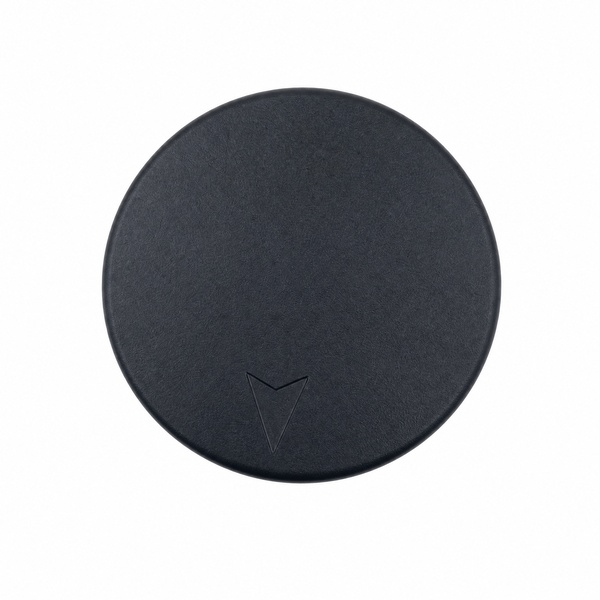
HBEV322 / HBEV322H Compact RTK GNSS Receiver with Compass — Septentrio mosaic-G5
Compact RTK GNSS receiver with compass for drones, robots and small vehicles
- Septentrio mosaic-G5 P3H with integrated GNSS antenna
- Centimetre-level RTK: 0.6 cm + 0.5 ppm, 7 s initialization
- Built-in QMC5883L compass on I2C
- HBEV322H: dual-antenna GNSS heading, 0.15° at 1 m baseline
- Up to 20 Hz, 2 × UART + I2C on one GH1.25 8-pin connector
- AIM+ anti-jamming and Galileo OSNMA anti-spoofing
- Lightweight, 3.3–5 V supply, under 800 mW
No forms to fill in — we reply within one business day.
Compact RTK GNSS receiver with compass for UAVs and robots
The Eview HBEV322 is a compact RTK GNSS receiver with compass. A Septentrio mosaic-G5 P3H receiver, a multi-band GNSS antenna and a QMC5883L magnetometer sit in one compact housing, giving centimetre-level RTK positioning and a magnetic heading reference over a single connector. The HBEV322H version adds GNSS heading. Both are part of our mosaic-G5 smart antennas.
Receiver, antenna and compass in one compact unit
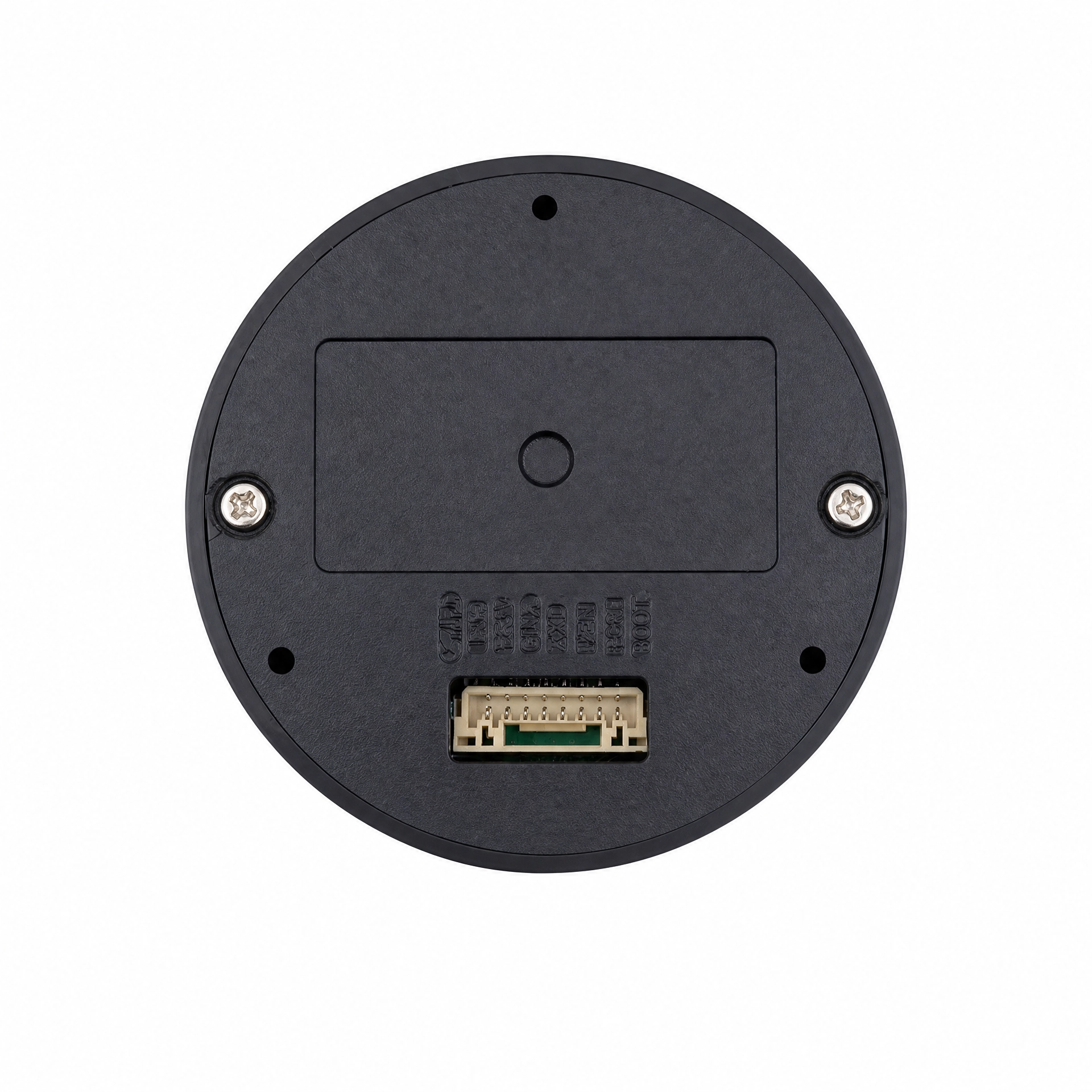
One GH1.25 8-pin connector carries power (3.3–5 V DC), two 3.3 V TTL UARTs and the I2C lines of the QMC5883L compass, which is the wiring flight controllers expect from a GNSS-plus-compass module. Three M2 threaded inserts make mounting simple. The HBEV322 accepts RTCM v3.x corrections (including MSM), outputs NMEA 0183 v2.3/v3.03/v4.0 and raw carrier-phase data, and runs at up to 20 Hz. See our ArduPilot GNSS guide.
HBEV322 or HBEV322H
The HBEV322 is the positioning version: RTK position, velocity and magnetic compass heading. The HBEV322H enables the GNSS heading function of the mosaic-G5 P3H: with a second antenna on a known baseline it gives 0.15° heading and 0.25° pitch/roll at 1 m, and 0.03° / 0.05° at 5 m. GNSS heading does not drift and is not disturbed by motors or steel structures. Learn how dual-antenna GNSS heading works and contact us for the heading set-up.
AIM+ anti-jamming and OSNMA anti-spoofing
Septentrio AIM+ suppresses narrowband and wideband interference from radio links, video transmitters and power electronics, and Galileo OSNMA authenticates satellite data against spoofing. Read about anti-jamming GNSS receivers and OSNMA anti-spoofing. LOCK+ keeps tracking under vibration, APME+ reduces multipath, IONO+ protects RTK during scintillation and RAIM+ monitors integrity.
Applications
- UAVs and drones: light RTK GNSS and compass for multirotors and small fixed-wing aircraft.
- Robots and AGVs: centimetre positioning and heading for outdoor autonomous robots.
- Robotic lawn mowers: RTK navigation without a boundary wire.
- Precision agriculture: compact RTK for field robots and spraying drones.
- USVs and small boats: position and heading for uncrewed surface vessels.
- Inspection and patrol: reliable positioning for inspection drones and patrol robots.
Frequently asked questions
What is the difference between the HBEV322 and the HBEV322H?
Both use the Septentrio mosaic-G5 P3H and give the same RTK accuracy. The HBEV322 provides RTK position and a magnetic compass; the HBEV322H also enables GNSS heading (0.15° at 1 m baseline) when used with a second antenna.
Does the HBEV322 work with ArduPilot and PX4?
It is built for that wiring: GNSS data runs over a 3.3 V TTL UART and the QMC5883L compass is read over I2C on the same GH1.25 8-pin connector, as on common GNSS-compass modules. Both autopilots include a Septentrio receiver driver; check your firmware version and ask us for the recommended settings.
Why does the HBEV322 have a compass?
The QMC5883L magnetometer gives the autopilot a heading reference when the vehicle is stationary or hovering. Calibrate it after mounting and keep it away from motors and power cables.
How does the HBEV322 compare with the HBEV11 and HB52?
The HBEV11 is a larger smart antenna with a full-band patch for base stations and vehicles. The HB52 is a receiver box with external antennas and microSD logging. The HBEV322 is the smallest all-in-one option.
How do I get the full HBEV322 datasheet or a quote?
Email sales@gnss-solutions.com for the complete datasheet, or ask a quote with your application and quantity.
Related reading
HBEV322 specifications
| Versions | HBEV322: RTK positioning + compass · HBEV322H: adds dual-antenna GNSS heading (second-antenna set-up on request) |
|---|---|
| GNSS engine | Septentrio mosaic-G5 P3H, 789 hardware channels, integrated antenna |
| GNSS signals | GPS L1C/A, L1C, L2C, L2P(Y), L5 · GLONASS L1, L2, L3 CDMA · Galileo E1, E5a, E5b, E6 · BeiDou B1I, B1C, B2a, B2I, B2b, B3I · QZSS L1C/A, L1C/B, L2C, L5, L6 · NavIC · SBAS |
| RTK accuracy (RMS) | 0.6 cm + 0.5 ppm horizontal, 1 cm + 1 ppm vertical |
| RTK initialization | 7 s |
| Standalone / DGNSS accuracy | 1.2 m / 0.4 m horizontal; 1.9 m / 0.7 m vertical |
| Heading / pitch-roll (HBEV322H) | 0.15° / 0.25° (1 m baseline); 0.03° / 0.05° (5 m baseline) |
| Velocity accuracy | 0.03 m/s |
| Update rate | 1–20 Hz (default 1 Hz) |
| Time to first fix | Cold <35 s, hot <10 s, reacquisition <1 s |
| Data formats | RTCM v3.x (incl. MSM) input · NMEA 0183 v2.3/v3.03/v4.0 output · raw carrier-phase output (Septentrio SBF) |
| Interface | GH1.25 8-pin: 2 × UART (3.3 V TTL, 4800–921600 bps, default 115200), I2C |
| Compass | QMC5883L 3-axis magnetometer (I2C) |
| Power | 3.3–5 V DC, <800 mW |
| Temperature | Operating −35 °C to +80 °C · storage −40 °C to +85 °C |
| Dimensions | φ47 × 35.9 mm (3 × M2 inserts) |
| Complete datasheet | On request: sales@gnss-solutions.com |
Product datasheet
The complete datasheet (GNSS signals, interfaces, pin-out, electrical and environmental specifications) is available on request. Email sales@gnss-solutions.com with the product name and your application.
Support documentation
Ask a quote or contact our engineers for integration support.