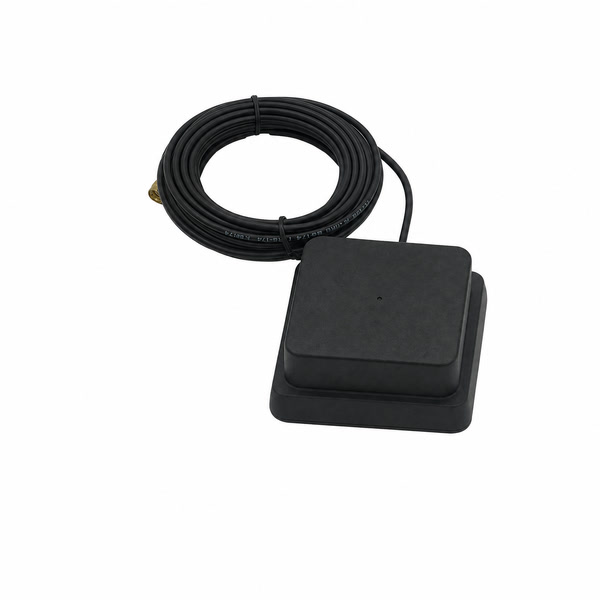
EV226 Magnetic Mount Vehicle GNSS Antenna — Multi-Band, IP67
Magnetic-mount multi-band GNSS antenna for vehicles and autonomous machines
- GPS, GLONASS, Galileo and BeiDou, multi-frequency, plus L-band
- Includes GPS L5, Galileo E6 and BeiDou B2a
- Active antenna: 33 ± 2 dB LNA, noise figure ≤2 dB
- Phase-centre error ±3 mm, 4 dBi maximum gain
- Magnetic mount, 75 × 75 × 30 mm, ≤70 g
- IP67, −40 °C to +85 °C
- 3 m RG174 cable with SMA male connector
No forms to fill in — we reply within one business day.
Magnetic mount vehicle GNSS antenna
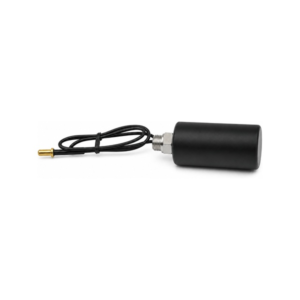
The Eview EV226 is a magnetic mount vehicle GNSS antenna for cars, delivery vehicles, trucks and autonomous machines. It receives GPS, GLONASS, Galileo and BeiDou on several frequencies, plus L-band, and attaches to any steel roof in seconds with no drilling. A built-in low-noise amplifier, powered by the receiver, drives the 3 m cable to a receiver inside the vehicle. Read our technical buyer’s guide to GNSS antennas, or see all Eview GNSS antennas.
Multi-band, multi-constellation coverage
The EV226 covers GPS L1, L2 and L5, GLONASS G1 and G2, Galileo E1, E5b and E6, BeiDou B1I, B2I and B2a, and L-band. With several frequencies from four constellations, a multi-frequency receiver can use more satellites and resolve RTK more reliably in streets with buildings and trees.
Phase-centre stability and multipath rejection
The phase-centre error is ±3 mm, which keeps the measured position consistent for lane-level and centimetre-level work. The antenna is right-hand circularly polarised (RHCP) with an axial ratio of ≤3 dB, which helps reject reflected signals from buildings and other vehicles. A metal vehicle roof under the magnetic base also acts as a ground plane that shields the antenna from signals arriving from below. For more on multipath, see how a choke ring antenna reduces multipath.
Built-in low-noise amplifier
The EV226 is an active antenna. Its LNA gives 33 ± 2 dB gain with a noise figure of ≤2 dB and passband ripple of ±2 dB, enough to drive the 3 m RG174 cable. It runs from 3.3 V to 12 V DC supplied by the receiver over the coaxial cable and draws ≤50 mA. High out-of-band rejection reduces interference from cellular base stations and on-board radios; it complements the interference mitigation in the receiver (see anti-jamming GNSS receivers).
Mechanical and environmental design
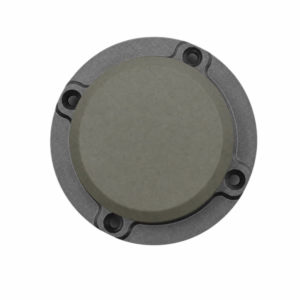
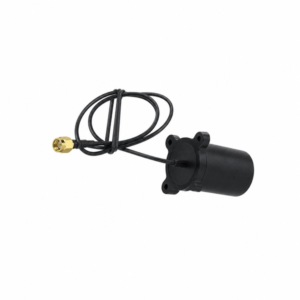
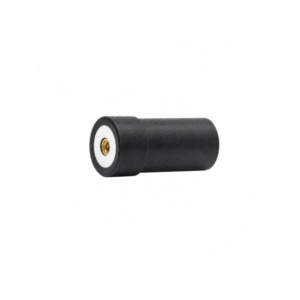
The housing measures 75 × 75 × 30 mm and weighs ≤70 g without cable. A magnetic base holds it on steel roofs and machine bodies. The antenna is rated IP67 and operates from −40 °C to +85 °C, so it can stay on the vehicle in rain, washing and summer heat. Storage is −55 °C to +85 °C at up to 95% humidity, non-condensing. A fixed 3 m RG174 cable ends in an SMA male connector.
Compatibility with Eview receivers
The EV226 works with multi-frequency GNSS receivers that supply 3.3–12 V antenna bias. It pairs with the HB6 GNSS receiver for vehicle RTK, and two EV226 antennas on one roof can feed a dual-antenna receiver such as the HB56H heading receiver for heading without vehicle motion. See how dual-antenna GNSS heading works.
Applications
- Vehicles and logistics: lane-level positioning for delivery vehicles, trucks and buses.
- Robotics and AGVs: quick-fit antenna for outdoor autonomous robots and delivery robots.
- Precision agriculture: guidance antenna for tractors and field vehicles.
- Construction and mining: positioning for site vehicles and machines.
- Inspection and patrol: survey and inspection vehicles on roads and pipelines.
- Surveying and GIS: vehicle-mounted mapping and data collection.
Frequently asked questions
Is the EV226 an active or a passive antenna?
It is an active antenna. It has a built-in LNA with 33 ± 2 dB gain and ≤2 dB noise figure, powered by the receiver through the coaxial cable at 3.3–12 V DC and ≤50 mA.
Which GNSS signals does the EV226 receive?
GPS L1/L2/L5, GLONASS G1/G2, Galileo E1/E5b/E6, BeiDou B1I/B2I/B2a and L-band.
How is the EV226 mounted and connected?
The magnetic base holds it on a steel roof or machine body without drilling. A fixed 3 m RG174 cable with an SMA male connector runs to the receiver; use an adapter if your receiver has a different antenna connector.
Can I use two EV226 antennas for heading?
Yes. Mount two EV226 antennas on the roof with a fixed separation and connect them to a dual-antenna receiver such as the HB56H. For a fixed or survey-grade installation, also see the EV288 GNSS antenna.
How do I get the full EV226 datasheet or a quote?
Email sales@gnss-solutions.com for the complete datasheet with the structural drawing, or ask a quote with your application and quantity.
Related reading
EV226 specifications
| Antenna type | Active multi-band GNSS antenna with built-in LNA |
|---|---|
| GNSS signals | GPS L1, L2, L5 · GLONASS G1, G2 · Galileo E1, E5b, E6 · BeiDou B1I, B2I, B2a · L-band |
| Polarisation | RHCP |
| Maximum gain | 4 dBi |
| Axial ratio | ≤3 dB |
| Phase-centre error | ±3 mm |
| Azimuth coverage | 0° to 360° |
| LNA gain | 33 ± 2 dB |
| Noise figure | ≤2 dB |
| VSWR | Antenna ≤1.5 · LNA ≤2.0 |
| Supply voltage / current | 3.3–12 V DC / ≤50 mA (via coaxial cable) |
| Impedance | 50 Ω |
| Cable / connector | 3 m RG174 / SMA male |
| Dimensions / weight | 75 × 75 × 30 mm / ≤70 g (without cable) |
| Mounting | Magnetic base |
| Environmental | IP67 · operating −40 °C to +85 °C · storage −55 °C to +85 °C |
| Complete datasheet | On request: sales@gnss-solutions.com |
Product datasheet
The complete datasheet (GNSS signals, interfaces, pin-out, electrical and environmental specifications) is available on request. Email sales@gnss-solutions.com with the product name and your application.
Support documentation
Ask a quote or contact our engineers for integration support.