EV210 Multi-Frequency UAV GNSS Antenna — Compact Cylinder, IP67
Small, light multi-frequency GNSS antenna for UAVs and compact rovers
- GPS L1/L2, GLONASS G1/G2, Galileo E1, BeiDou B1/B2/B3
- Active antenna: 33 ± 2 dB LNA gain, noise figure ≤1.3 dB
- Phase-centre error ±3 mm, axial ratio ≤3 dB
- High out-of-band rejection against cellular and radio-link interference
- Supply DC 3.3–12 V from the receiver’s antenna port
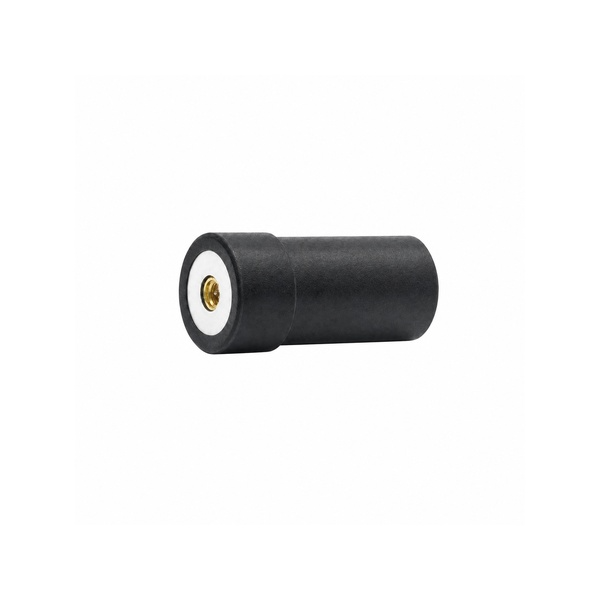
- Compact cylinder Φ27.5 × 57.6 mm with direct SMA (male) mount
- IP67 when mounted, −40 °C to +70 °C operation
No forms to fill in — we reply within one business day.
Compact multi-frequency UAV GNSS antenna
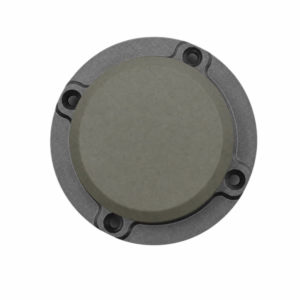
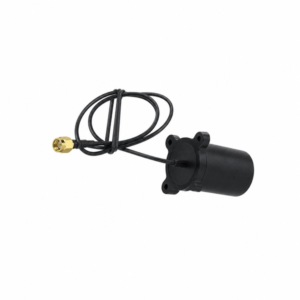
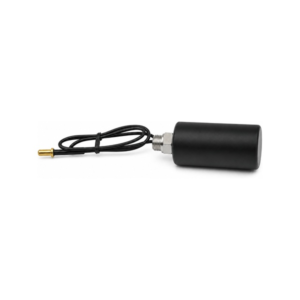
The Eview EV210 is a multi-frequency UAV GNSS antenna in a small cylinder of Φ27.5 × 57.6 mm. It receives GPS, GLONASS, Galileo and BeiDou on two or more bands each, including BeiDou B3, and feeds a clean, amplified signal to an RTK GNSS receiver. It mounts directly on its SMA connector, so it suits light multirotors, fixed-wing drones and small rovers where every gram and every centimetre counts. It is part of our GNSS antenna range; for help choosing, read how to choose a GNSS antenna for UAVs.
Multi-band coverage
The EV210 covers GPS L1/L2, GLONASS G1/G2, Galileo E1 and BeiDou B1/B2/B3. Two frequencies per constellation let the receiver remove most ionospheric error and fix RTK ambiguities faster and more reliably than with an L1-only antenna. Note that GPS L5 and Galileo E5a/E6 are not in the EV210 band list; if you need them, choose the EV220 or EV288.
Phase-centre stability and multipath rejection
Phase-centre error is ±3 mm, small enough for centimetre-level RTK and PPK work. Right-hand circular polarisation with an axial ratio of ≤3 dB helps the antenna reject signals reflected from the airframe, ground and buildings, which arrive with reversed polarisation. The wide beam gives good low-elevation tracking when part of the sky is blocked; mount the antenna clear of propellers, carbon plates and other metal to keep multipath low.
LNA gain and noise
A built-in low-noise amplifier gives 33 ± 2 dB gain with a noise figure of ≤1.3 dB and passband ripple of ±2 dB. High out-of-band rejection reduces interference from cellular base stations, video and telemetry links on board. The LNA is powered through the coaxial cable at DC 3.3–12 V.
Mechanical and environmental
The antenna is Φ27.5 × 57.6 mm with an SMA (male) connector and a rubber pad on the mounting face. It is rated IP67 when mounted (IP65 as a bare antenna), operates from −40 °C to +70 °C and can be stored from −55 °C to +70 °C at up to 95% non-condensing humidity.
Compatibility with Eview receivers
The 33 dB LNA gain and 3.3–12 V supply suit the antenna inputs of Eview receivers such as the ultralight HB52 and the HB51 with magnetometer. For dual-antenna heading, use two EV210 antennas on a rigid baseline with a dual-antenna receiver.
Applications
- UAVs and drones: multi-band reception for RTK and PPK mapping and survey drones.
- Inspection and patrol: power-line and pipeline patrol drones that need a small, robust antenna.
- Precision agriculture: crop-spraying drones and light field robots.
- Hazard and deformation monitoring: compact antenna for landslide and disaster-monitoring stations and drones.
- Surveying and GIS: aerial photography and mapping payloads.
- Robotics: small outdoor robots where space for the antenna is limited.
Frequently asked questions
Is the EV210 an active or a passive antenna?
It is an active antenna. A built-in LNA gives 33 ± 2 dB gain and needs DC 3.3–12 V from the receiver through the coaxial cable.
Does the EV210 receive GPS L5 or Galileo E5a?
No. It covers GPS L1/L2, GLONASS G1/G2, Galileo E1 and BeiDou B1/B2/B3. For L5, E5a and E6 choose the EV288 full-band antenna.
How do I mount the EV210?
It screws directly onto an SMA (female) port or bulkhead adapter. It is IP67 once mounted with its rubber pad sealing the base, and IP65 as a bare antenna.
How does the EV210 compare with the EV108?
The EV108 is a 60 g flange-mount antenna for civil drones and light aircraft. The EV210 is a small cylinder that screws straight onto an SMA port.
How do I get the full EV210 datasheet or a quote?
Email sales@gnss-solutions.com for the complete datasheet, or ask a quote with your application and quantity.
Related reading
EV210 specifications
| GNSS frequency bands | GPS L1/L2 · GLONASS G1/G2 · Galileo E1 · BeiDou B1/B2/B3 |
|---|---|
| Polarisation | RHCP, 50 Ω |
| Antenna element maximum gain | 2.5 dBi |
| LNA gain | 33 ± 2 dB |
| Noise figure | ≤1.3 dB |
| Axial ratio | ≤3 dB |
| VSWR | Antenna ≤1.5, LNA ≤2.0 |
| Phase-centre error | ±3 mm |
| Supply voltage | DC 3.3–12 V |
| Connector | SMA (male), direct mount |
| IP rating | IP67 when mounted (IP65 bare antenna) |
| Dimensions | Φ27.5 × 57.6 mm |
| Operating temperature | −40 °C to +70 °C |
| Complete datasheet | On request: sales@gnss-solutions.com |
Product datasheet
The complete datasheet (GNSS signals, interfaces, pin-out, electrical and environmental specifications) is available on request. Email sales@gnss-solutions.com with the product name and your application.
Support documentation
Ask a quote or contact our engineers for integration support.