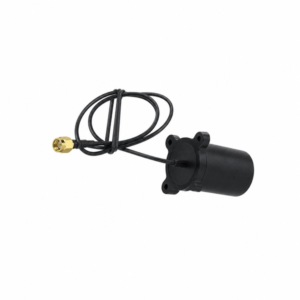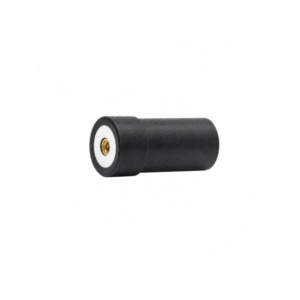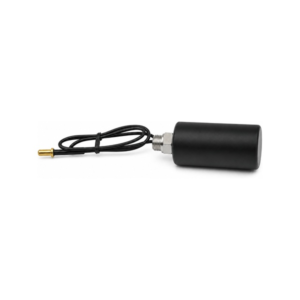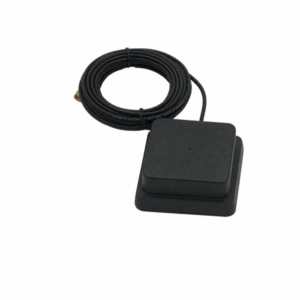
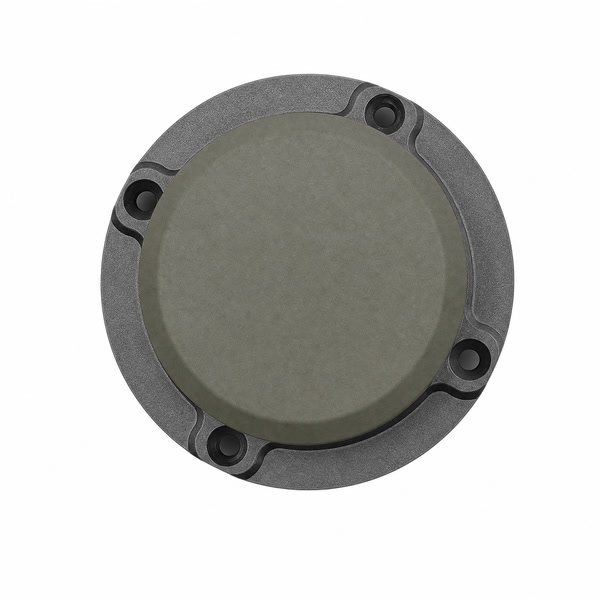
EV108 Multi-Band Aviation GNSS Antenna — 60 g for Civil Drones
Lightweight multi-band GNSS antenna for civil drones and UAV aviation
- GPS, GLONASS, Galileo and BeiDou, multi-frequency, plus L-band
- Includes BeiDou B3, GLONASS G3 and Galileo E6
- Active antenna: 36 ± 2 dB LNA, noise figure ≤2 dB
- Phase-centre error ±3 mm, axial ratio ≤3 dB
- Weight ≤60 g, Φ90 × 24.6 mm
- IP67 when installed, −40 °C to +85 °C
- TNC connector, four 4.3 mm mounting holes
No forms to fill in — we reply within one business day.
Multi-band aviation GNSS antenna for civil drones
The Eview EV108 is a multi-band aviation GNSS antenna for civil drones and unmanned aircraft. It receives GPS, GLONASS, Galileo and BeiDou on several frequencies, plus L-band, in a 60 g housing only 24.6 mm high. A built-in low-noise amplifier, powered by the receiver through the antenna cable, keeps signal quality high over long cable runs inside the airframe. Read our guide to choosing a GNSS antenna for UAVs, or see all Eview GNSS antennas.
Multi-band, multi-constellation coverage
The EV108 covers GPS L1, L2 and L5, GLONASS G1, G2 and G3, Galileo E1, E5b and E6, BeiDou B1, B2 and B3, and L-band. Tracking several frequencies from four constellations gives a multi-frequency receiver more satellites and more signals to work with, which helps fast and stable RTK positioning when part of the sky is blocked by terrain, structures or the airframe itself.
Phase-centre stability and multipath rejection
The phase-centre error is ±3 mm, so the electrical centre of the antenna stays close to its mechanical centre, which matters for centimetre-level positioning and for consistent results between flights. The antenna is right-hand circularly polarised (RHCP) with an axial ratio of ≤3 dB; this helps reject signals reflected from the ground and nearby surfaces, which change polarisation when they bounce. The radiation pattern covers 0° to 360° in azimuth with a wide beam for good low-elevation reception. For a deeper look at multipath, see how a choke ring antenna reduces multipath.
Built-in low-noise amplifier
The EV108 is an active antenna. Its LNA gives 36 ± 2 dB gain with a noise figure of ≤2 dB and passband ripple of ±2 dB. It runs from 3.3 V to 12 V DC supplied by the receiver over the coaxial cable and draws ≤50 mA, so no separate power wiring is needed. High out-of-band rejection reduces interference from nearby radio transmitters and base stations; it complements the interference mitigation in the receiver (see anti-jamming GNSS receivers).
Mechanical and environmental design
The housing is Φ90 mm across the mounting flange and 24.6 mm high (connector not included), and weighs ≤60 g. Four 4.3 mm holes on a 56 × 56 mm square fix it to the airframe, and the TNC female connector is sealed with an O-ring. Installed, the antenna reaches IP67. It operates from −40 °C to +85 °C and can be stored from −55 °C to +85 °C at up to 95% humidity, non-condensing.
Compatibility with Eview receivers
The EV108 works with multi-frequency GNSS receivers that supply 3.3–12 V antenna bias and accept its LNA gain. Typical pairings are the HB52 ultralight RTK receiver, the HB51 RTK heading receiver and the HB50 multi-frequency receiver. Use a cable or adapter that matches the receiver’s antenna connector, and check the receiver’s accepted LNA gain range, especially for dual-antenna heading set-ups.
Applications
- UAVs and drones: light, low-profile antenna for mapping, survey and industrial drones.
- Inspection and patrol: power-line and pipeline inspection drones.
- Precision agriculture: crop-spraying and crop-monitoring drones.
- Surveying and GIS: aerial photography and mapping with RTK or PPK.
- eVTOL and civil aviation: multi-band reception for civil unmanned aircraft development.
- Robotics: compact antenna for outdoor robots and small vehicles.
Frequently asked questions
Is the EV108 an active or a passive antenna?
It is an active antenna. It has a built-in LNA with 36 ± 2 dB gain and ≤2 dB noise figure, powered by the receiver through the coaxial cable at 3.3–12 V DC and ≤50 mA. No separate power supply is needed.
Which GNSS signals does the EV108 receive?
GPS L1/L2/L5, GLONASS G1/G2/G3, Galileo E1/E5b/E6, BeiDou B1/B2/B3 and L-band. It suits multi-frequency RTK receivers used on drones.
How is the EV108 mounted?
With four screws through 4.3 mm holes on a 56 × 56 mm square on the Φ90 mm flange. The TNC female connector exits at the bottom and is sealed with an O-ring; the installed antenna is rated IP67.
How does the EV108 compare with other Eview drone antennas?
The EV108 is a 60 g, 24.6 mm low-profile antenna with a TNC connector and flange mount. For other sizes, connectors and band options, see the EV210 GNSS antenna and the EV220 GNSS antenna, or ask us to recommend one for your airframe.
How do I get the full EV108 datasheet or a quote?
Email sales@gnss-solutions.com for the complete datasheet with the structural drawing, or ask a quote with your application and quantity.
Related reading
EV108 specifications
| Antenna type | Active multi-band GNSS antenna with built-in LNA |
|---|---|
| GNSS signals | GPS L1, L2, L5 · GLONASS G1, G2, G3 · Galileo E1, E5b, E6 · BeiDou B1, B2, B3 · L-band |
| Polarisation | RHCP |
| Maximum gain | 2.5 dBi |
| Axial ratio | ≤3 dB |
| Phase-centre error | ±3 mm |
| Azimuth coverage | 0° to 360° |
| LNA gain | 36 ± 2 dB |
| Noise figure | ≤2 dB |
| VSWR | Antenna ≤1.5 · LNA ≤2.0 |
| Supply voltage / current | 3.3–12 V DC / ≤50 mA (via coaxial cable) |
| Impedance | 50 Ω |
| Connector | TNC female, O-ring sealed |
| Dimensions / weight | Φ90 × 24.6 mm (connector not included) / ≤60 g |
| Mounting | 4 × Φ4.3 mm holes, 56 × 56 mm square |
| Environmental | IP67 (installed) · operating −40 °C to +85 °C · storage −55 °C to +85 °C |
| Complete datasheet | On request: sales@gnss-solutions.com |
Product datasheet
The complete datasheet (GNSS signals, interfaces, pin-out, electrical and environmental specifications) is available on request. Email sales@gnss-solutions.com with the product name and your application.
Support documentation
Ask a quote or contact our engineers for integration support.