RTK Fix Ratio Under Tree Canopy and Rain: HB56 / HB56H Field Review
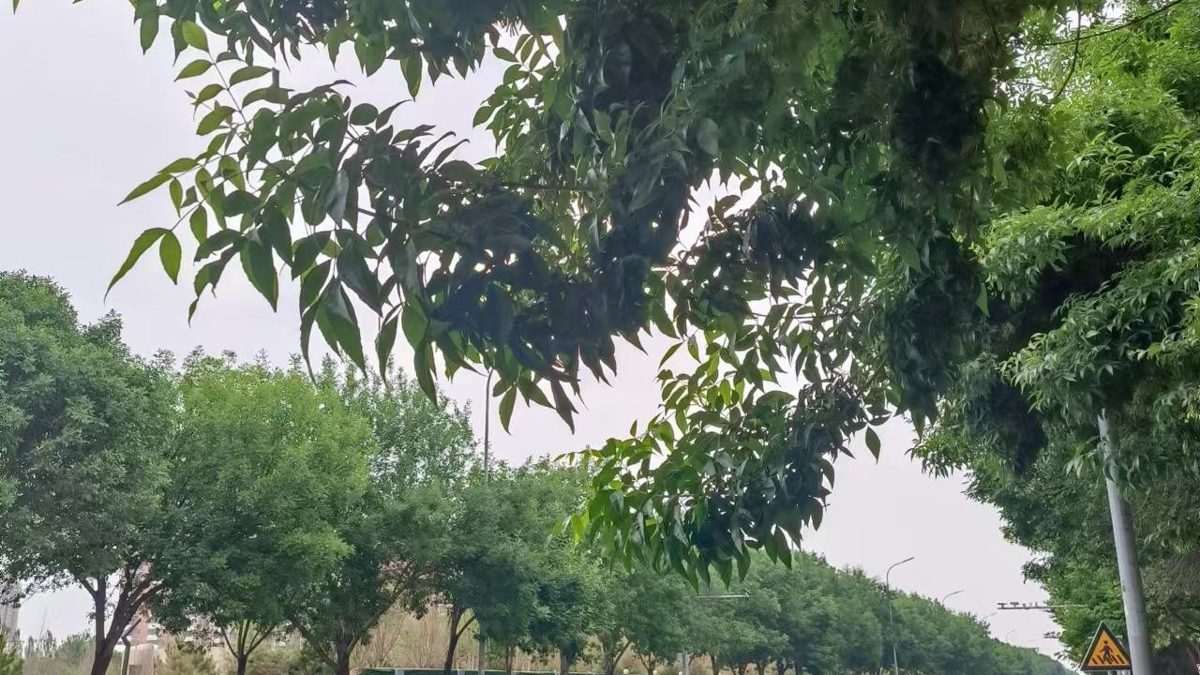
Does RTK hold a fixed solution under tree canopy in the rain? We reviewed 36 screenshots from a three-session field test with several receivers logging side by side: half sky with rain (21.9 km baseline), under roadside trees with rain (16.4 km) and under trees with a third-party network RTK service (1.99 km). The receivers included the Septentrio mosaic-X5 and mosaic-H platforms used in the Eview HB56 and HB56H.
Quick answer: Every record logged at about 10 Hz. Under trees with rain and in half sky with rain, three of four record groups held a 100.0% fixed (Q=1) share for the whole session (39–61 minutes). The group in title position 4 – labelled as a third-party receiver – dropped to 88.5% and 83.3%. With no ground truth or raw data, this is a review of solution status, not an accuracy ranking.
Download the full 27-page report (PDF) – all 36 figures, per-screenshot readings and the retest design.
What was tested
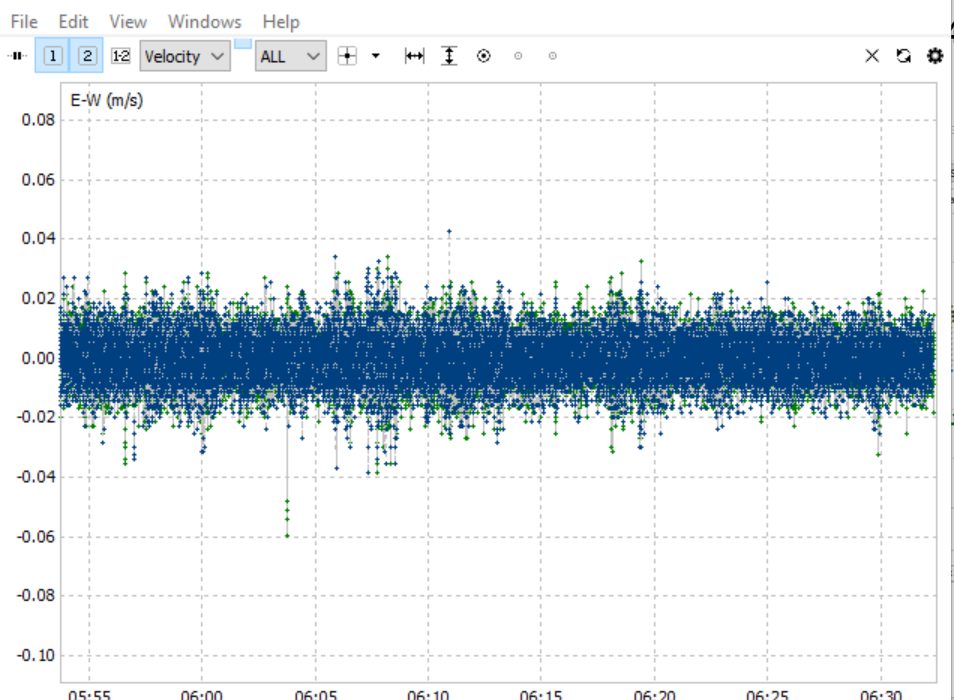
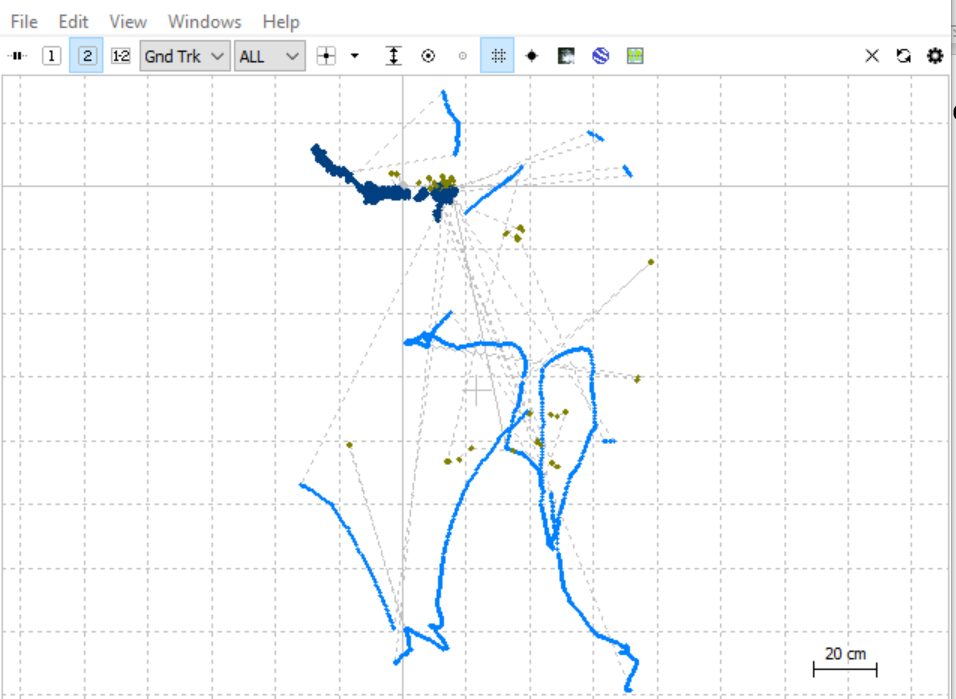
The test team logged three sessions on 24 August 2023 at an urban site, with antennas on a vehicle roof under a row of roadside trees. Logs were viewed in RTKLIB’s RTKPLOT and the status bar of each screenshot gives the total epoch count N and how many epochs were Q=1 (fixed), Q=2 (float) and Q=4 (DGPS).
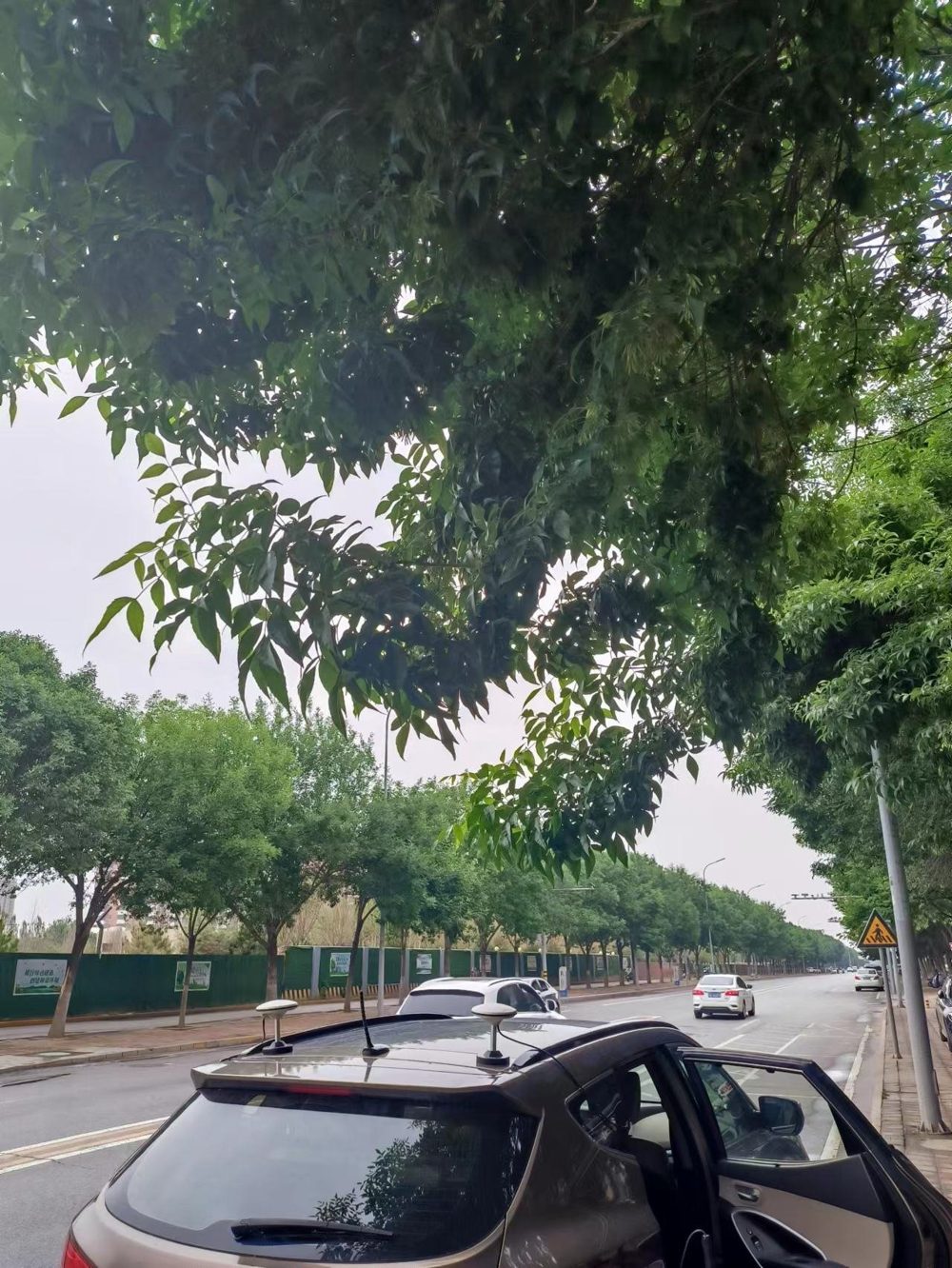
| Scene | Baseline | Duration | Epochs (N) | Rate |
|---|---|---|---|---|
| Half sky + rain | 21.9 km | ≈ 61 min | 36,328–36,678 | ≈ 10 Hz |
| Under tree + rain | 16.4 km | ≈ 39 min | 23,268–23,439 | ≈ 10 Hz |
| Under tree + network RTK | 1.99 km | ≈ 61 min | 36,489–36,546 | ≈ 10 Hz |
Baselines are the values written on the slides. Rain intensity, canopy density and the correction settings were not recorded.
Results: RTK fix ratio by record group
Screenshots with the same epoch count were grouped into “record groups”. Grouping relies on N and title order, not serial numbers, so each group is not a confirmed physical unit.
| Scene | Title position | N | Q=1 (fixed) | Q=2 (float) | Q=4 (DGPS) |
|---|---|---|---|---|---|
| Half sky + rain, 21.9 km | 1 | 36,328 | 100.0% | 0 | 0 |
| 2 | 36,7xx* | 100.0%* | n/s | n/s | |
| 3 | 36,583 | 100.0% | 0 | 0 | |
| 4 | 36,678 | 83.3% | 5.9% | 10.8% | |
| Under tree + rain, 16.4 km | 1 | 23,268 | 100.0% | 0 | 0 |
| 2 | 23,439 | 100.0% | 0 | 0 | |
| 3 | 23,329 | 100.0% | 0 | 0 | |
| 4 | 23,386 | 88.5% | 4.7% | 6.9% | |
| Under tree + network RTK, 1.99 km | 2 groups | 36,489 / 36,546 | 100.0% / 100.0% | 0 | 0 |
* Last two digits of N unreadable in the screenshot. n/s = not shown.
The same pattern appears in both long-baseline scenes: only the record group in title position 4 falls below a 100% fix ratio. On the slides that position is labelled as a third-party receiver, but without serial numbers we report it as a position, not as a verdict on any model.
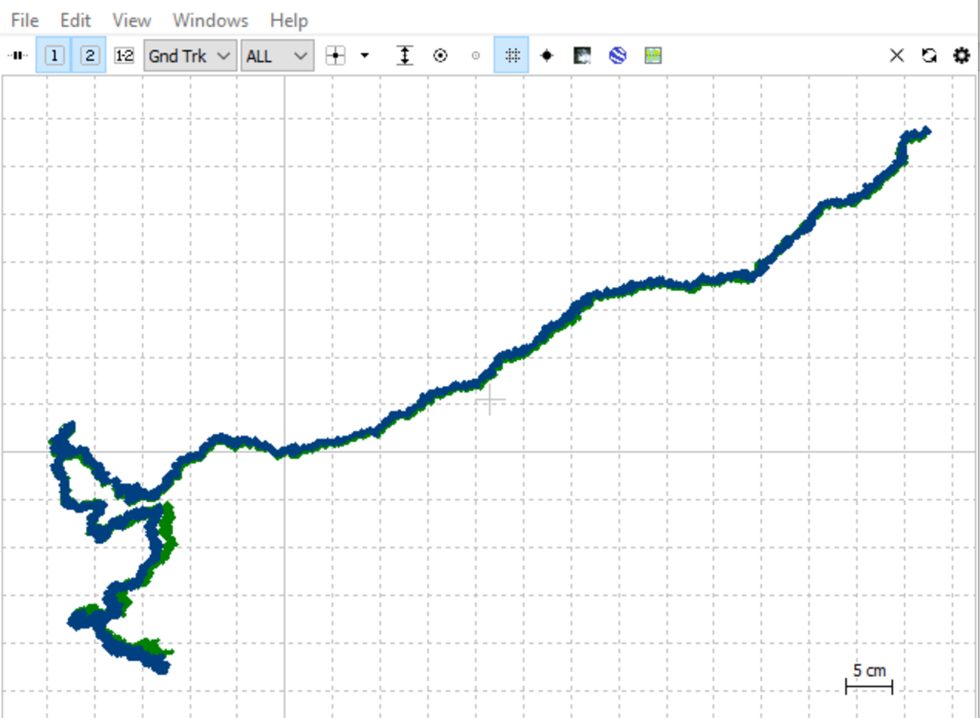
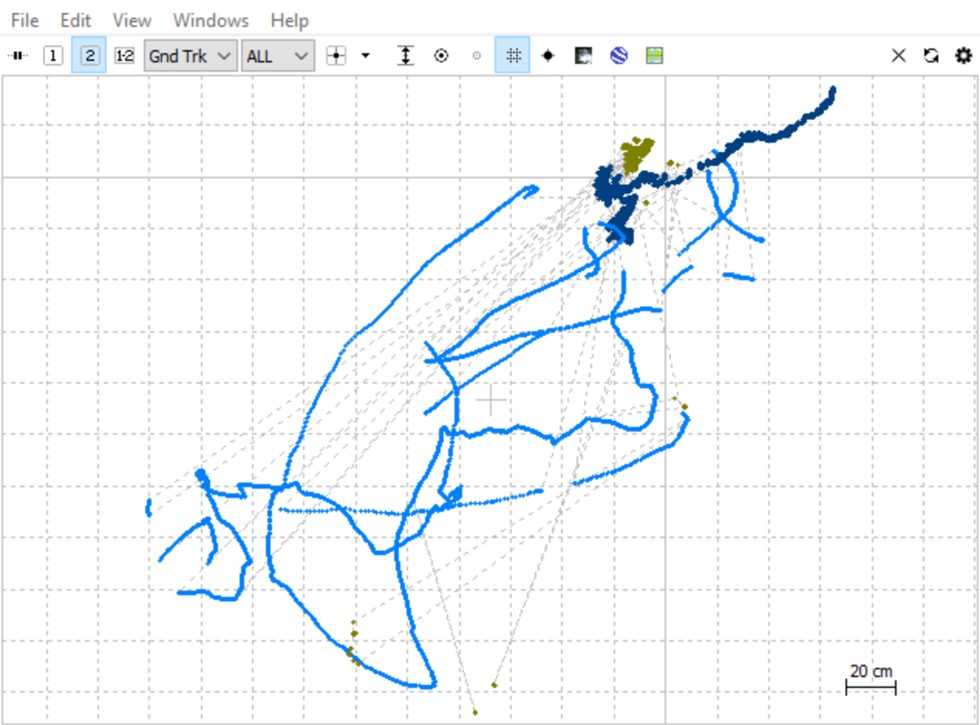
What this data can and cannot tell you
- It can show which record held which status distribution, for how long and at what logging rate, under each combination of canopy, rain and baseline.
- It cannot show accuracy. There was no ground truth, no raw observations (SBF/RINEX) and no processing settings, so no RMS, CEP or horizontal error is given. A fixed status is not proof that the position was correct.
- It is not a controlled comparison. Canopy, baseline, site, correction source and weather all changed between scenes, so no single factor can be blamed for a difference.
- One unit, one session per position. Unit-to-unit and model-to-model differences cannot be separated, and adjacent 10 Hz epochs are correlated.
How to test RTK under trees properly
If you are evaluating receivers for work under canopy – forestry survey, orchards, robot lawn mowers or outdoor robots – design the test so the result means something:
- Control the variables: same site, baseline and correction source; cross dry/wet with open-sky/under-tree; at least three repeats each.
- Have a truth: a known control point or a long static baseline solution in a stated coordinate frame.
- Log everything: antenna height, canopy photos, rain intensity, firmware, elevation mask, ambiguity settings, satellites used, PDOP and C/N0.
- Use at least two units per model, and log heading at the same time on dual-antenna receivers.
- Report more than fix ratio: horizontal and vertical RMS and 95th percentile, time to first fix and availability, after decimating to 1 Hz.
Interference protection matters under canopy too: multipath from wet leaves and nearby buildings is where Septentrio’s AIM+ and multipath mitigation help keep the fix. For processing your own logs, RTKLIB is the free tool used for the plots in this review.
Receivers in this review
- Eview HB56 – Septentrio mosaic-X5 inside: multi-band, multi-constellation RTK with AIM+ and SD-card logging, for drones, survey and robotics.
- Eview HB56H – Septentrio mosaic-H inside: dual-antenna heading and attitude where a magnetic compass is unreliable.
- Eview HB10 – Septentrio AsteRx-m3 inside: board-level positioning for compact integrations.
See also: HB56 update rate, latency and jitter test data. To plan a canopy test or get a receiver for evaluation, email sales@gnss-solutions.com.
Frequently asked questions
Can RTK keep a fixed solution under tree canopy?
Yes, often. In this test, three of four record groups held a 100% fixed (Q=1) share for 39–61 minutes under trees and in half sky, both in rain. Heavy canopy, long baselines and poor multipath handling can still cause float or DGPS periods, as the fourth record group showed (83–89% fixed).
Is the Q=1 share the same as the RTK fix rate?
In RTKLIB’s convention Q=1 means a fixed solution, so the Q=1 share is the fix rate reported by the logging software. It describes status only; it does not prove the positions were close to the truth.
Does rain affect RTK accuracy?
Rain itself has little effect on GNSS signals, but wet foliage increases attenuation and multipath under canopy. This test had no dry control, so it cannot say how much of any drop was due to rain.
Why can’t this data show which receiver is better?
Each title position had one device and one session, devices were matched to records by order rather than serial number, and there was no ground truth. Any accuracy ranking would have no basis.
What is the difference between the HB56 and HB56H?
The HB56 uses the Septentrio mosaic-X5 for single-antenna multi-band RTK. The HB56H uses the mosaic-H and adds dual-antenna heading, giving heading and pitch or roll directly.
What logging rate should I use under trees?
These sessions logged at about 10 Hz. Under canopy, the fix rate depends mainly on observation quality, elevation mask and multipath mitigation; a higher rate mainly helps you see exactly when the fix was lost and recovered.
Sources and credits
- Test data, screenshots and site photos: field test of 24 August 2023, supplied to Eview GNSS by the test team as a 22-slide deck and a two-part Chinese technical report (R1.2). Used with permission; the original files are not publicly available. The full English edition is the PDF report.
- Plots: RTKPLOT from RTKLIB, the open-source GNSS positioning package.
- GNSS modules referenced: Septentrio mosaic-X5, mosaic-H and AsteRx-m3 family (official product pages).
- Interference protection: Septentrio AIM+.
- Edits for publication: software title bars and status-bar coordinates cropped, vehicle registration blurred, third-party receiver anonymised. Readings are unchanged. No third-party product images are used.